Transparency
How I use artificial intelligence
You probably got here by clicking the label on an image. Here is the long answer: where I use AI, where I don't, and what that means for anyone who trusts me with a project.
The short version
Cantina Grafica is a product of its time. Artificial intelligence is changing this craft, and pretending not to use it would feel dishonest, as well as a way of imposing on clients the time and cost that are no longer necessary. At the same time, a tool is not a project: the value of a label lies in the idea, in the consistency and in the details that survive all the way to print.
So: I use it, I always say so before starting, and I remain responsible for what I deliver.
Where I use it
- Illustrations. Images that end up in the delivered work, like the animals on the labels. When that happens, the image carries the transparency label.
- Mockups and visualisations. Bottles in context, renderings for presentations, shelf simulations. They exist to help decide and they are not photographs: these are labelled too.
- Creative exploration. In the early stages, to see several directions quickly. The final result is often produced another way.
- My own copy and research. To write the content of this site and to find my way around regulation and market. Never for the text that goes on a label: that comes from the client.
Where I don't
- Logos and brand marks. I may look at generated references to get my bearings, but I draw the mark myself. A brand mark has to be defensible and recognisable, and that takes a hand.
- Layout, typography and print-ready files. My own work, in Illustrator and InDesign. Typefaces come from Adobe Fonts, Google Fonts or the foundries, properly licensed.
- Faces and people. I don't generate faces. If a project needs people, we use real photographs supplied by the client or shots from actual events.
- Other people's styles. I don't use AI to imitate an illustrator's hand or the imagery of an existing brand.
- Development for clients. It isn't among the services I offer: I use AI for the code of this site, not for other people's work.
How it works with clients
You know beforehand, not after. I tell you at the start of the project, not once the work is done. If you would rather it wasn't used, we work without it: time and cost change, the quality of the project doesn't.
Nothing goes to print without your approval. That step resolves most of the risk: unwanted resemblances, wrong details, inconsistencies with the territory or the wine are spotted and corrected before production.
The words are yours. Appellations, vintages, mandatory data and descriptions come from you, often prepared by your oenologist. I set them in the design without interpreting them: I don't touch that data.
The printer has to be involved. I need their specifications, or a direct contact, to align the export and the delivery of the print-ready files. That is how you avoid surprises on the actual bottles.
The files are yours. What I deliver remains your property, with no limitations tied to the tool used to produce it.
One thing worth knowing
An image generated entirely by artificial intelligence, taken on its own, may not be protected by copyright the way a hand-drawn illustration would be: in many jurisdictions protection requires a human creative contribution. There is also a practical side that has nothing to do with the law: anyone using the same tool can produce a similar image without having copied anything.
That concerns the single element, though, not the label. What I deliver is composite work: the composition, the relationship between animal and name, the typographic choice, the hand-drawn logo, the post-production on the image, the proportions that hold from front to back. Those are human decisions, and they are what makes the work. The label as a whole is no more fragile than any other; the isolated drawing is.
And there is a protection worth more than any copyright discussion, one a winery should want regardless of AI: registering the label as a trademark. It protects commercial use, it does not depend on how the image was produced, and it is what actually gives you leverage against a competitor who copies. It isn't a service I offer, but it is the advice I give anyone building a range meant to last.
I am not a lawyer and this area is still moving: I would rather tell you these things upfront than discover them together later.
The legal framework
Since 2 August 2026, Article 50 of Regulation (EU) 2024/1689 (the AI Act) requires disclosure of content generated or manipulated with AI where it resembles real people, objects, places or events closely enough to appear authentic. That is why some of the images published on this site carry the official European Commission label, which also indicates whether the content is fully generated or only partly modified with artificial intelligence.
The icons and the related guidance are published here: EU icons for labelling AI-generated content.
The labels I use
There are three of them, and they say different things. Clicking the label on an image brings you here, so you can tell which case applies.
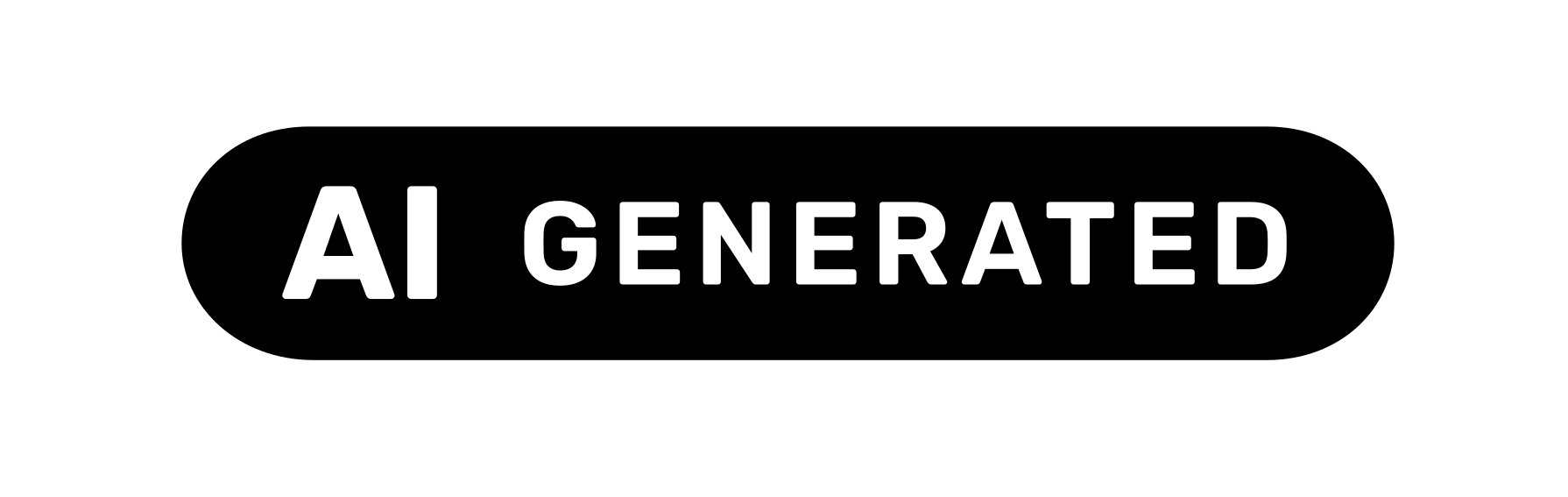
Fully generated. The image was created by AI from scratch, not from an existing photograph.
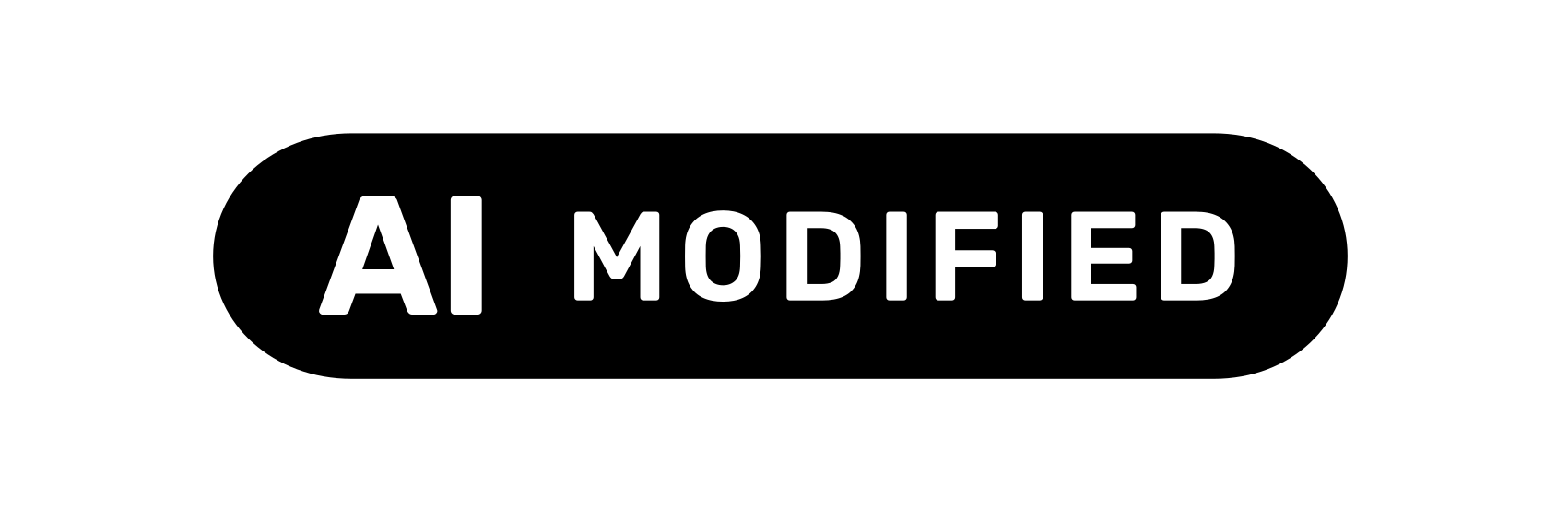
Partly modified. Real content, a photograph for instance, substantially altered with AI. A different case from the one above, and disclosed differently for that reason.
Generic icon. Flags the involvement of AI when it sits alongside explanatory text and the degree of intervention does not need spelling out.
Wondering how this applies to your project? Ask me before we start: that is the right moment.
Let's talk about it